SACRAMENTO, CA — Today, Assemblymembers Mark González and Isaac Bryan jointly introduced two pieces of legislation, AB 1645 and AB 1646, to address unreasonably limited physical contact between incarcerated people and their families in prison and juvenile facilities.
Across the state, there is no standard definition or enforcement for “excessive contact,” which has led to mass confusion and the immediate suspension of visiting privileges and harsh disciplinary action, including prohibition of parole. In practice, “excessive contact” can include a mother holding their child or kissing their cheek for just a second too long.
“After weeks or months apart, incarcerated people and families simply want to reunite normally – hugging, holding hands, running into their mom or dad’s arms,” said Assemblymember Mark González (D–Los Angeles). “Physical touch is more than a kind gesture; it’s human-to-human connection with your loved ones. It gives a person hope, visibility, and even restores a sense of humanity.”
After playing a game of pickup basketball with incarcerated youth at a local juvenile hall, Isaac Bryan declared,
“The ability to receive and give a hug to your loved ones is a critical part of the healing and transformation process for young people who are incarcerated,” said Assemblymember Isaac Bryan (D–Los Angeles). “It’s time to stop weaponizing essential pieces of our shared humanity and calling it rehabilitation.”
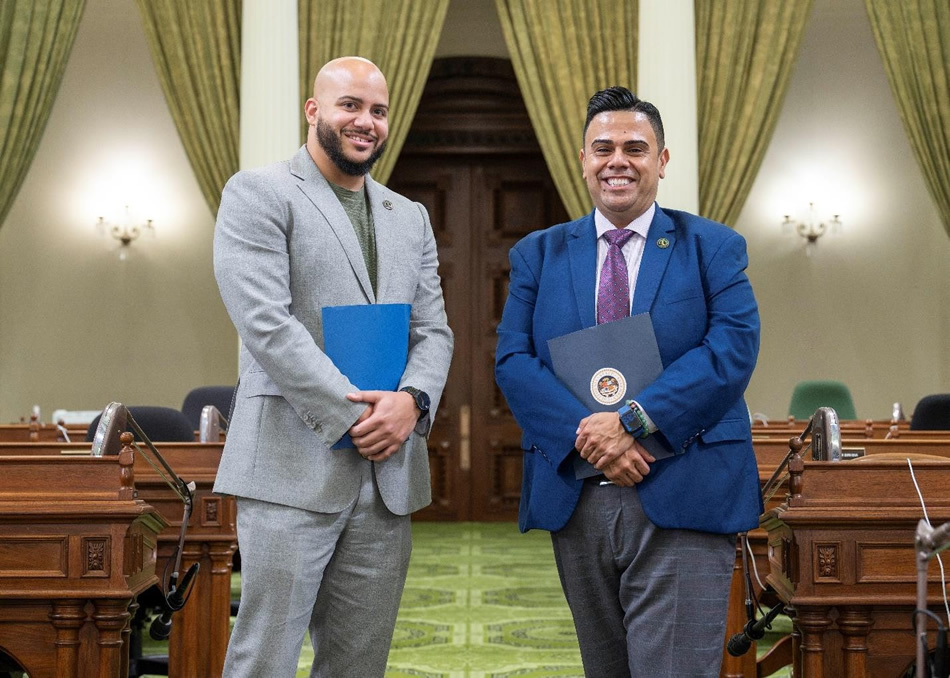
Stop Policing Hugs
Unreasonable visitation policies strain important family relationships that are so crucial to the mental and emotional health of those who are incarcerated and their loved ones. You can see this in the way incarcerated family members flinch away when their loved ones reach out for a hug, and the way a child’s face shifts to helplessness when their mothers pull away.
AB 1645: The Humanizing and Uniting Generations Safely (HUGS) Act clarifies the definition of “excessive contact” in state prison visitation rooms. This bill outlines allowed behavior such as handholding, hugging, and holding one’s child.
Similarly, AB 1646: The Hug Act ensures youth in juvenile facilities have the right to engage in appropriate, reasonable physical contact during in-person visits, such as hugging and handholding.
Saving Costs, Saving Lives
AB 1645 and AB 1646 support the healthy development of the 195,000 children with incarcerated parents and the nearly 3,000 youth in California juvenile facilities. Physical displays of affection, such as holding and patting, play a vital role in emotional regulation and healthy development into adulthood.
Withholding such touch can be devastating for youth and children. It’s time to stop dehumanizing adolescents and kids, as well as incarcerated people.
AB 1645’s co-sponsor, Bridges of Hope, echoed these convictions.
“The HUGS Act restores what punishment should never remove: humanity. If the goal is healing, then humane contact must be part of the treatment.”
Regular visits while incarcerated have shown to reduce recidivism by 26% and improve in-custody conduct by 25%, significantly reducing the cost of reincarceration as well as disciplinary and security costs. These bills allow more incarcerated Californians to benefit from positive visitation experiences by removing a significant source of harmful stress and anxiety.
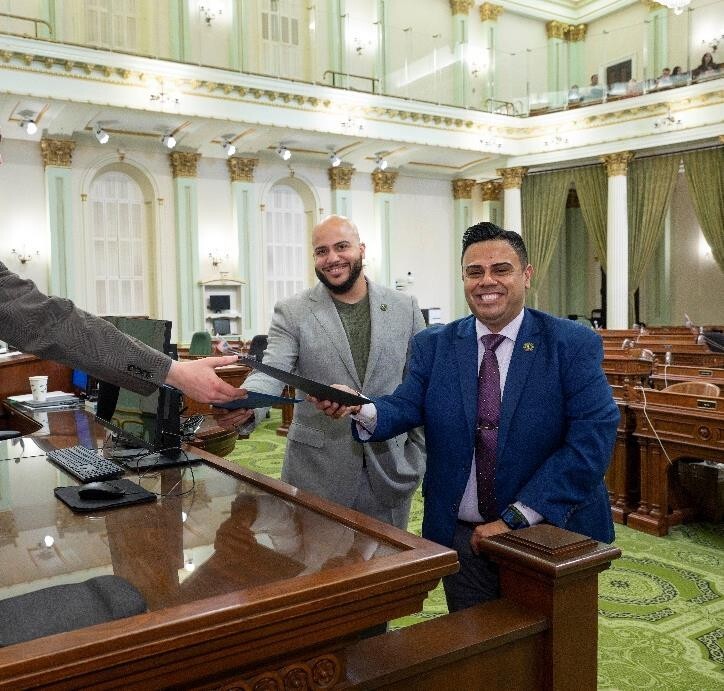
Assemblymember Mark González is the Assembly Majority Whip. He serves on the Committees on Appropriations, Health, Public Safety, Rules, and Utilities & Energy. He represents the 54th District, composed of the cities of Los Angeles, Commerce, Montebello, and Vernon.
Assemblymember Isaac Bryan is Vice Chair of the Legislative Black Caucus and Chair of the Select Committee on The Status of Boys & Men of Color. He represents the 55th District, including Culver City, Baldwin Hills, the Crenshaw District, Pico-Robertson, and other neighborhoods in West and South Los Angeles.
CONTACT: Jaspreet Johl; Jaspreet.Johl@asm.ca.gov; (916) 335-8871
Kyle Johnson; Kyle.Johnson@asm.ca.gov; (925) 549-2030


